
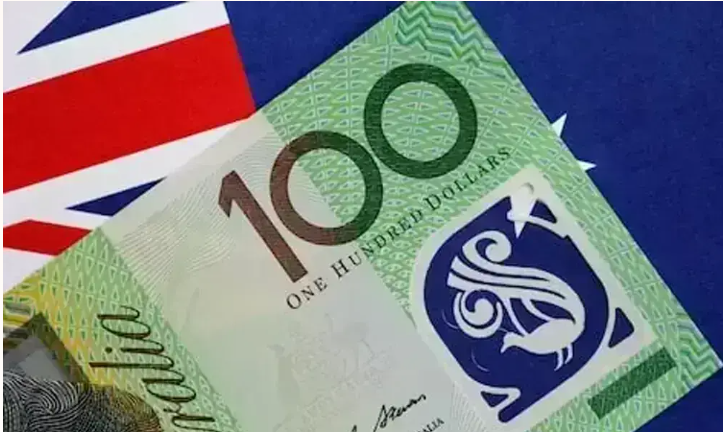
SYDNEY — The Australian and New Zealand currencies regained some strength on Friday after renewed hopes of a possible peace agreement in the Middle East helped calm global financial markets.
The Australian dollar climbed back to around $0.7045 after falling to a two-month low of $0.6979 earlier. The currency had rallied nearly 0.8% overnight as investor confidence improved. However, analysts say the Aussie still needs to rise above $0.7080 to signal a stronger recovery, as the overall trend remains weak.
The New Zealand dollar also recovered after touching a low of $0.5770, later settling near $0.5824. Market resistance for the kiwi is now seen around $0.5846 and $0.5886.
Investor sentiment improved after reports suggested progress toward reopening the Strait of Hormuz, a key global oil shipping route. If the route fully reopens, oil prices could fall sharply, easing inflation pressures caused by high energy costs and reducing the need for aggressive interest rate hikes by central banks.
In Australia, markets now see little chance that the Reserve Bank of Australia will raise interest rates at its next meeting, especially after already increasing rates three times earlier this year.
Financial markets currently place only a 26% chance of another rate hike in August, a sharp drop from the 80% probability expected just a month ago. Expectations for further tightening this year have also weakened significantly.
Paul Bloxham, HSBC’s head of Australian economics, said the Australian economy has already started slowing down and several recent indicators suggest growth may weaken further in the coming months.
HSBC now expects Australia could begin cutting interest rates from the third quarter of 2027 as inflation gradually cools through late this year and into next year.
The possibility of easing tensions in the Middle East also boosted bond markets. Australia’s 10-year government bond yields fell to a three-month low, while New Zealand’s two-year swap rates dropped to their lowest level in seven weeks.
Despite this, markets still expect the Reserve Bank of New Zealand to raise its cash rate at its July 8 meeting, as policymakers remain focused on controlling inflation. However, investors now expect only two rate hikes this year instead of the three previously anticipated.
Economic data due next week is expected to show New Zealand’s economy grew by around 0.8% in the first quarter of the year. However, rising global energy prices have since put pressure on growth.
Fresh manufacturing data released Friday also showed factory activity in New Zealand contracted in May, ending seven consecutive months of expansion, while consumer confidence remains weak.
