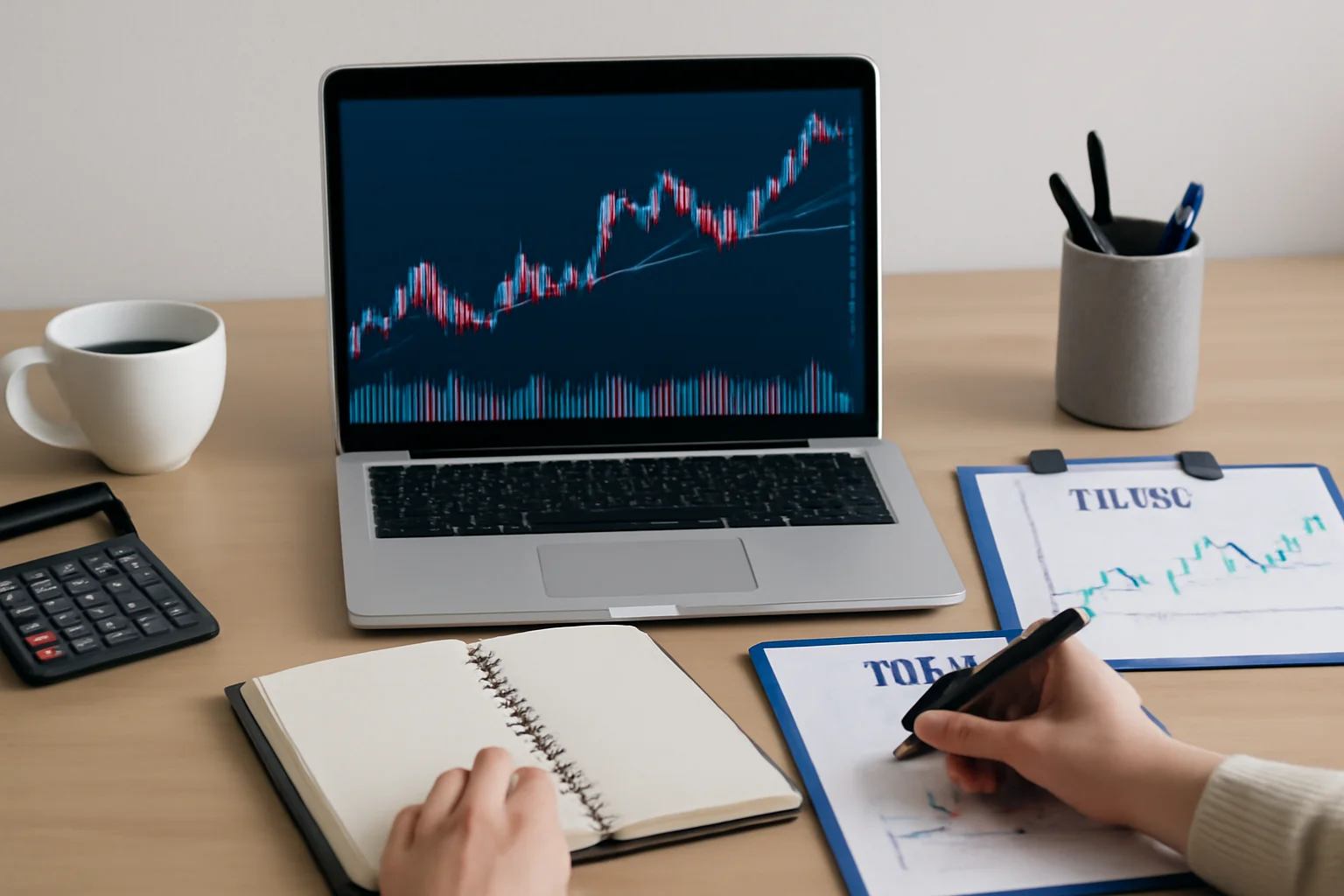
The initial information that needs to be aware of the process of how to learn forex trading is the knowledge of the foreign exchange market, where people sell and buy pairs of currencies, such as USD/JPY or EUR/USD. Being a new forex trader, it is important to understand how to read the market, such as the liquidity, the market time, and the world forces that impact the prices of currencies. Using bit by bit trading, in Forexflora, one is interested in the significance of how currency pairs respond to different trading hours, and the idea that one can use the same to respond to the profit-making opportunities with respect to having the most reputable strategies. Getting used to these pillars assists the traders in acquiring a deeper knowledge of the ways to learn forex trading so that they can make better decisions with a lot of confidence.
To be a good forex trader, one must practice. You will have the means and instruments to get your skills down to the wire at Forexflora, with the advantage of dealing in real-time with the market and the maneuvers, backed up by a team of experts. The longer you spend, the more you will learn how to manage the risk, keep an eye on the market trends, and learn your trading secrets to get positive outcomes in terms of profit. You will learn more about how to learn forex trading effectively as you go on. You will be in a position with hard work and proper direction to gradually turn whatever you know into profitable trading opportunities. The practice will lead you through the process of becoming an experienced forex trader.
What is Forex Trading?
Trading forex means taking part in the foreign exchange market. Here, people and institutions buy and sell currency pairs, like the Japanese yen and the British pound. This global market is decentralized. It operates electronically and over the counter, without a central exchange. It functions 24 hours a day across different market hours, with a massive daily volume. Price movements in this market are influenced by economic indicators, interest rates, and geopolitical events. Understanding forex trading means knowing how various factors affect price changes. It also requires grasping how the foreign exchange system operates across different time zones and regions.
Is Forex Trading Right for You? Be Honest Before You Start
Before you dive into forex trading, first check your risk tolerance. Also, make sure your emotional discipline is ready for the journey. Trading forex for beginners believes that free forex trading is a sure win. They often overlook how fear, overconfidence, and changing market feelings impact their choices. Successful trading involves more than just strategy. You must manage psychological risks, stay calm, and remain disciplined and patient. If you can’t control your emotions while making an investment, forex might not be your game. The market will test your resolve. How you react in those moments sets successful traders apart from those who burn out. Emotional resilience is key to thriving in this volatile environment.
Step-by-Step Guide: How to Learn Forex Trading Effectively
- How to start trading forex step by step, including the process of selecting most best forex trading platform for beginners.
- Open a trading account with a broker who is in authority.
- Open a practice account and open a dummy account without losing her money.
- Analytics market relationships and market graphs, and indicators.
- Study technical analysis, basic analysis, and the price of currencies.
- Stay ahead of economic forces that influence the market.
- Being an amateur, you need to determine the risk level and develop a trading strategy.
- Identify stop-loss and take-profit to mitigate risks.
- Sensitizes the spreads, fees, and leverage of the site.
- Learn the contents at your own pace.
- Keep a track of your trades so that you can track your progress and refine your strategy.
- One should just have patience and always insert it until they understand how to start trading in forex.
Top 10 Forex Terms Every Beginner Should Master
- Pips: The tiniest fluctuation in currency exchanges, which is required to determine the changes in the prices.
- Spreads: This merely represents the disparity between the selling and buying prices of two currencies.
- Leverage: This gives you the ability to trade in a larger size at a lower capital.
- Margins: Margins are the capital that is needed to enter the market.
- Limit Orders- Buy or sell at a certain price, and this will assist you buy-in and selling out.
- Stop-Loss: This is a form of order that automatically orders out to prevent the volume that you can lose.
- Take-Profit: A sell-out order taken after reaching a profit target.
- Market Price: This is the market price, which you can either sell or purchase a currency pair.
- Short and Long: It is an investing stance that is taken on whether the price is going to decline (short) or increase (long).
- Liquidity: This is the nature of the convenience of selling or purchasing a currency and does not influence the price.
Tools You Need to Start Learning How to Learn Forex Trading
- The best place to start as a forex trader: The site that is user-friendly should include the facilities required by a novice.
- Live trading charts: A Visual display of the market trends, and make a sound decision on the spot.
- Technical indicators: The changes in the price and the price prediction are possible with the help of indicators.
- Demo account: This will be via the use of a demo account, and get acquainted with it without incurring losses.
- Economic facts: Be close to the events that are taking place in the world and have an impact on the currency trends.
- News events: The Forex Market Trading is sensitive to news about the economy.
- Technical analysis: Find out about the market trends and patterns, and become more proficient in trading.
- Educational tools: Learn more about trading with the help of tutorials and guides.
Risk Management: The Most Important Lesson in Forex
One must initially teach beginners about the principles of the best forex trading strategy, including trend trading, range trading, and breakout trading, to start with the most appropriate method of how to learn forex trading. Trend trading is the trading over an increasing or decreasing market trend, which could be either bearish or bullish. The range trading may be implemented when the price range is set, and the prices are on the increase and decreasing between the support and resistance levels. These trends are often in the form of a triangle or a channel. The strategies are important in knowing how to learn forex trading and providing the basis upon which other sophisticated techniques of trading can be applied..
Breakout trading involves trading out of these price ranges of trading positions, and it can be a healthy move. Scalping and day trading are high-frequency trading styles, and they are based on the notion of high-frequency trades, as opposed to swing trading and position trading, which are based on short-term and long-term trends. Any strategies are time-consuming, particularly in reaction to the false signals, and need to be supported by a straightforward examination of market fundamentals to guarantee that they do not make baseless risks in tackling the forex market.
Simple Forex Trading Strategies for Beginners
- Risk management is a shortcut to success in long-term trade.
- You should know the degree of your risk so that you do not end up making colossal losses.
- Leverage to control risk.
- Keep in mind the volatility of the market and the effect it has on the price.
- How to deal with emotional self-fear, overconfidence.
- The macroeconomic risks and the geopolitical risks are external forces that can have a potential effect on the market.
- Monitor the economic news, which presents the market directions.
- These are liquidity risks and regulatory risks, and offshore brokers should be considered in this case.
- It can be slipping, and that happens to your trade execution.
- Follow the interest and policies of the central bank.
- Appropriate risk management will assist in enhancing your success rate in day trading.
Practice Without Losing Money: Your Demo Account Plan
If you’re a beginner, the smartest way to get started with free forex trading is by using a demo account. You can explore the real market using virtual funds. This way, you can test your risk tolerance without risking real money. You can use platforms that offer copy trading in forex. This lets you follow pros while you learn. Stick to a set trading budget, like USD 50 or USD 100, and treat it like it’s real to build discipline.
Consider starting with micro accounts to ease into the game slowly. Keep a trading journal. It helps you track progress. You can learn from mistakes and build patience. This leads to better trading. Be aware of commissions and swap fees, as these can affect your trading plan even in a simulated setup. This method teaches the basics and gives real experience. It does this in a low-risk way, so you’re ready for live markets.
Final Thoughts
How to Learn Forex Trading: A forex trader must be a patient, disciplined person. It might seem challenging to become a forex trader when a beginner. However, you are able to form good learning habits provided you focus on the basics and take mini-stepwise. Every trader would also have time and experience to acclimatize to the markets. It is imperative to note that you will not achieve success overnight, hence you must be in a position to recall your long-term goals. With time and dedication, you would be able to make more informed and confident trading decisions. It is always important to remember that forex trading is a process, and you also develop as you go through the experience.
FAQs
How to Learn Forex Trading?
Learn the basics: currency pairs, pips, leverage, and spread. Use a demo account to practice. Create a trading strategy. Also, keep up with economic events.
What is flipping in forex?
Flipping in Forex means quickly buying and selling currency pairs. This strategy aims to make small profits from quick price changes.
How to do day trading?
Day trading means buying and selling currency pairs in one day. Traders use market trends, technical analysis, and risk management to earn profits.