
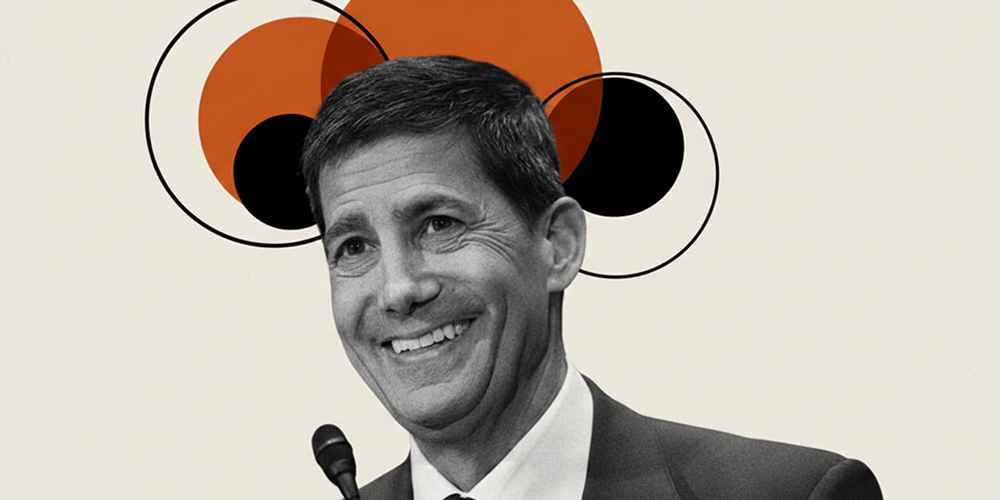
The US Federal Reserve is widely expected to keep interest rates unchanged for the fourth straight meeting in June, as markets closely watch the central bank’s updated economic projections and the first press conference from new Fed Chair Kevin Warsh.
The Federal Open Market Committee (FOMC) is expected to maintain the benchmark interest rate in the 3.5%–3.75% range. Since this outcome has already been fully priced into the market, investors will focus more on the Fed’s updated outlook and Warsh’s comments for clues about future policy direction.
This meeting comes at an important time for global markets. Energy prices have eased after the United States and Iran reached a framework agreement to reopen the Strait of Hormuz, reducing fears of prolonged supply disruptions. Oil prices, which had surged earlier this year amid geopolitical tensions, have now fallen back below $80 per barrel after previously climbing above $110.
Despite the recent drop in Oil prices, markets still believe the Fed could raise rates later this year. Current expectations suggest there is still a meaningful chance of at least one 25 basis point rate hike before the end of 2026.
Analysts believe the revised Summary of Economic Projections (SEP), including the closely watched “dot plot,” could provide major hints about the Fed’s next steps. If policymakers signal that at least one more rate hike remains likely this year, the US Dollar could strengthen further while Treasury yields rise. In that scenario, EUR/USD may continue moving lower.
On the other hand, if the updated projections show that most policymakers prefer to leave rates unchanged for the rest of the year, the Dollar could weaken and EUR/USD may recover.
Much of the attention will also be on Kevin Warsh’s tone during his first post-meeting press conference as Fed Chair. Investors want to see whether he supports keeping policy tight to fight inflation or leans toward a softer approach as energy prices cool.
Analysts at TD Securities expect the Fed to maintain a hawkish tone overall. They believe the central bank may remove its previous easing bias and adopt a more cautious stance on inflation. However, they also note that Warsh is unlikely to strongly challenge market expectations in his first meeting, as he may want to preserve credibility while shaping his long-term agenda.
Meanwhile, ING analysts say the US Dollar continues to receive support from strong economic data and expectations that the Fed could still tighten policy further. However, they argue that markets need clearer confirmation from Warsh that rate hikes remain a realistic possibility.
The future direction of the Dollar and EUR/USD will largely depend on how confident Fed officials are that inflation will return to target levels. Unless policymakers clearly signal that further tightening is off the table, any weakness in the Dollar may remain temporary.
From a technical perspective, analysts note that EUR/USD still faces important resistance levels. The pair remains below key moving averages, suggesting that bullish momentum has not fully returned yet. A break above the 1.1655–1.1675 area could open the door for further gains toward 1.1730 and possibly 1.1800. On the downside, support levels are seen near 1.1560, followed by 1.1500 and 1.1410.
Warsh also inherits a Federal Reserve committee that still leans relatively hawkish. Officials such as Dallas Fed President Lorie Logan, Cleveland Fed President Beth Hammack, and Minneapolis Fed President Neel Kashkari have all recently expressed concerns that inflation risks remain elevated.
Kashkari recently warned that inflation risks now outweigh labor market concerns, especially with ongoing global uncertainties. Logan struck an even more hawkish tone, arguing that inflation is not falling quickly enough toward the Fed’s 2% target and suggesting that higher interest rates could still become necessary later this year.
As a result, if Warsh eventually wants to move the Fed toward rate cuts, he may face resistance from several policymakers who remain focused on controlling inflation. More moderate officials may support keeping rates steady for now, but they are unlikely to back cuts unless inflation shows clearer signs of easing or the labor market weakens significantly.
