Published September 7, 2026, covering the trading week of September 7-13.
After a Friday jobs report that reshaped Fed rate expectations, this week brings the data that will either confirm or complicate that new narrative, alongside a European Central Bank decision and key releases out of Japan and China. Here’s what’s actually on the calendar and why each event matters.
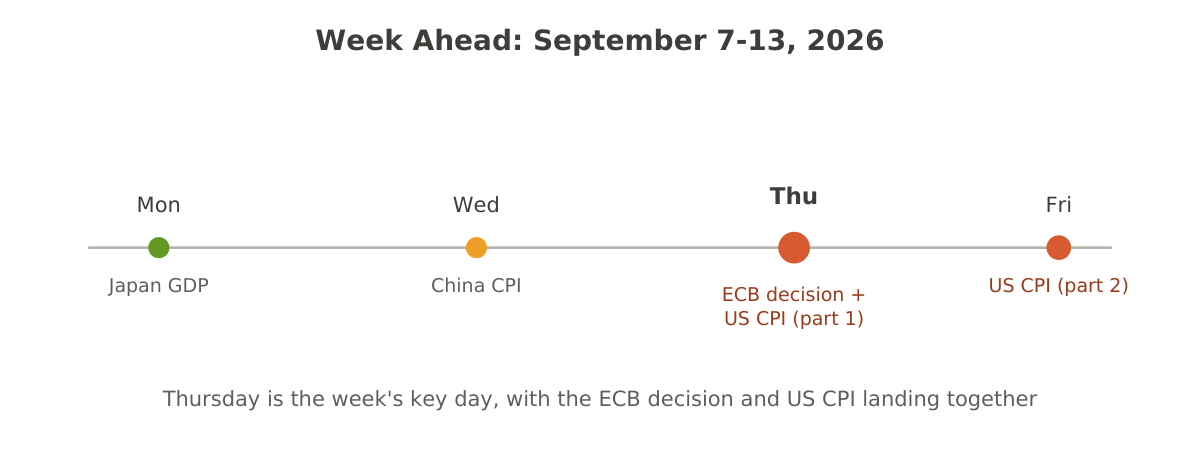
Monday: Japan GDP Data
The week opens with Japan’s GDP release, offering an updated read on the health of the Japanese economy heading into the Bank of Japan’s own policy meeting later this month. Given ongoing speculation about a potential BoJ rate hike on September 17-18, growth data that comes in soft could complicate the case for tightening, while a resilient reading would support it.
Wednesday: China CPI
China’s consumer inflation figures matter well beyond China’s own currency. As the largest trading partner for economies like Australia and New Zealand, Chinese economic data tends to ripple into AUD and NZD pairs specifically. Weaker than expected inflation, often read as a signal of soft domestic demand, has historically weighed on both the Australian and New Zealand dollars given their close economic ties to China.
Thursday: The ECB Decision and US CPI, Same Day
Thursday is the week’s most consequential day by a clear margin, with the European Central Bank’s policy decision landing on the same day as the first half of the US August CPI inflation report. The ECB isn’t expected to move from its current holding pattern, but the accompanying policy statement will be closely parsed for any signal about the central bank’s next steps, particularly with the Fed’s own decision just days later.
On the US side, following Friday’s blowout payrolls report and the resulting jump in Fed hike odds to 58%, this inflation data is arguably the single most important release standing between markets and the Fed’s September 15-16 decision. A hot reading would likely reinforce hike expectations further; a cooler one could inject fresh uncertainty into what currently looks like a fairly hawkish-leaning setup.
Friday: The Second Half of US CPI Data
Additional components of the US inflation picture round out the week, giving the market a fuller view heading into the weekend before the Fed’s blackout period narrows the flow of official commentary ahead of the meeting itself.
Why This Week Sets Up Next Week
None of this week’s data exists in isolation. It’s the final meaningful batch of information the Fed will have in hand before its September 15-16 meeting, and given how sharply expectations shifted after last Friday’s jobs report, this week’s inflation data carries outsized potential to either confirm or challenge the market’s current hawkish lean.
The proximity of the ECB decision to the Fed’s own meeting also matters for EUR/USD specifically. If the ECB’s tone this Thursday leans in a different direction than what the Fed signals the following week, that divergence could become a significant driver for the pair heading into the back half of September.
How to Approach the Week
With a central bank decision and two major inflation data points landing in a single week, volatility is likely to run above normal levels across EUR pairs, USD pairs generally, and AUD/NZD given the China data. Traders holding positions through Thursday in particular should factor in the possibility of sharp, fast moves around both the ECB announcement and the US CPI release, which land on the same day.
Final Thoughts
This week is less about any single headline and more about how the pieces fit together heading into the Fed’s mid-September decision. Japan’s GDP, China’s inflation data, the ECB’s tone, and two rounds of US CPI data will each add a piece to a picture that, after Friday’s jobs report, looks more uncertain than it did just a week ago.
This article reflects market conditions and data available as of the time of writing and is for informational purposes only, not financial advice.